
In my recent article, “Where Do I Belong?” I found myself considering where my ancestral loyalty belongs. Do I look to my European ancestors, or to my Native American ancestors?
The answer, I realized, is both.
I am a mixture of both. All of my ancestors, European and Cherokee, contributed in some way to the building of America. I am proud of them. I am honored by them. I no longer feel that I have to choose between them. That was the big-picture view of my American heritage.
But there is a smaller, more personal view of belonging that I never questioned.
I always knew where I belonged with my family. Both my maternal and paternal families were the people we came home to.
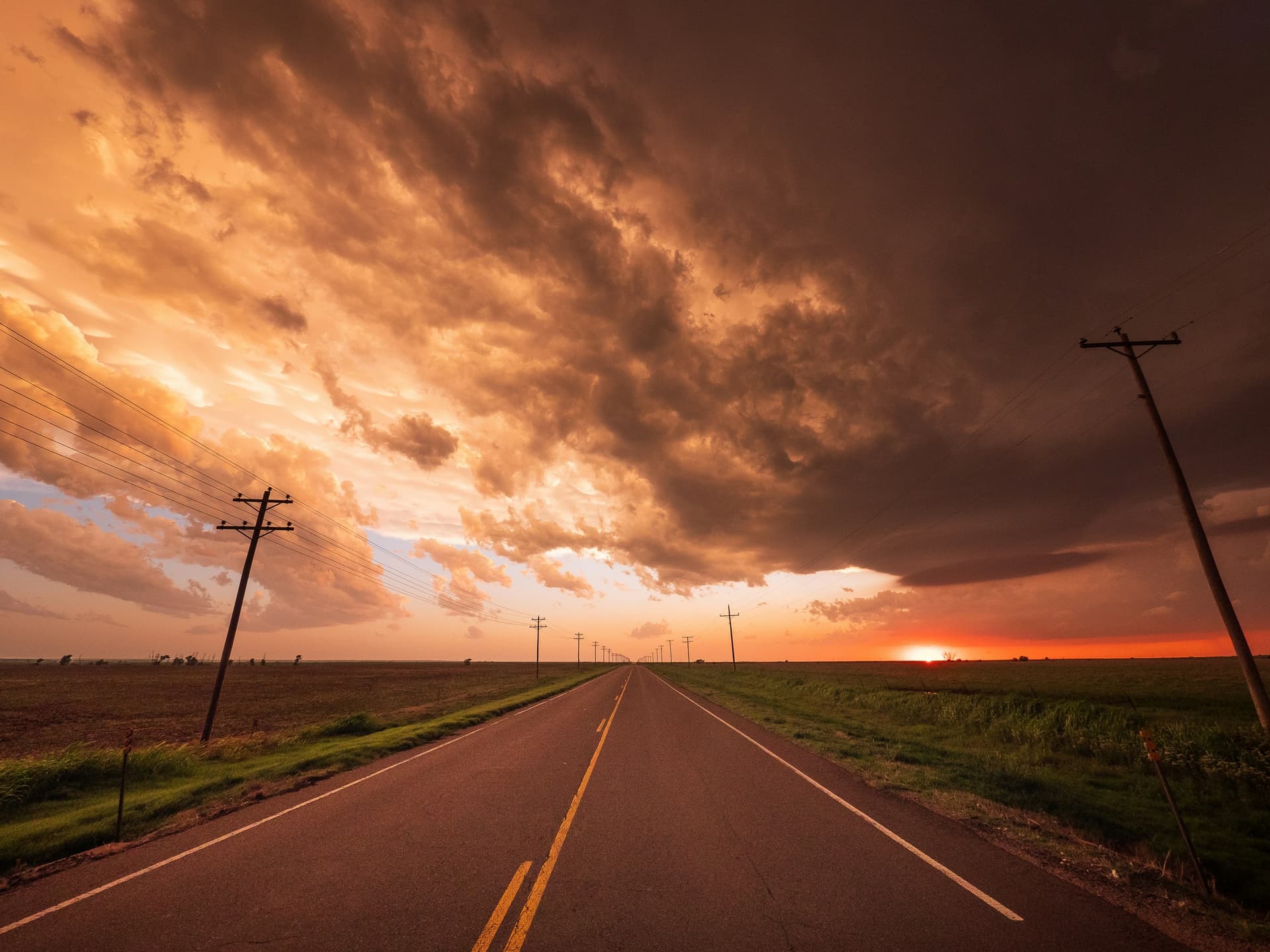
My mother was one of three children, and my father was the youngest of ten. When I was growing up, we didn't live in Oklahoma, but we came home every vacation. We would spend one week in the Yukon-El Reno area with my maternal grandparents, then travel to the Muskogee-Fort Gibson area to spend the next week with my paternal grandfather, my father's brothers and sisters, and their families.
Sometimes it seemed as though half the family planned their vacations around one another. My aunts and uncles would come home to Oklahoma, bringing their children with them. My parents would coordinate with them so that everyone could be together at the same time. And my grandfather—my Papa—would get to see all of his grandchildren together.
I never questioned whether I belonged. I was part of a tribe.
Whether I was with my European ancestors and grandparents or my Native American ancestors, I knew where I belonged. I had family. I had roots. I had a place to come home to.
My mother told me stories about her childhood that reinforced that sense of family. Both sets of her grandparents, on her mother's and father's sides, had lived with her parents at different times. It was simply how families worked. Grandparents helped raise the children. They watched the grandchildren when their parents needed to work or run errands. Older generations cared for younger generations and younger generations cared for the older ones. The generations were intertwined. Family wasn't something you visited occasionally. Family was part of everyday life. But America changed.
My father's generation grew up during a time when people increasingly had to leave home to find work. My father became an ironworker and traveled throughout the country building buildings, bridges, silos, coal powered power plants and other major steel structures.
I remember being about four years old and going downtown in Kansas City with my mother to meet my father for lunch. I looked up and saw him leaning over the edge of a building, waving down at us. I was terrified. I was certain my daddy was going to fall over the side of that building and onto the concrete below. I didn't know then that his work would take him—and eventually our family—far from the Oklahoma that was home to so many generations before us.
Our family scattered. I had aunts and uncles living in California, Minnesota and Texas. Their children grew up in different places, and eventually their children did, too. I have cousins scattered across the country.
Several years ago, we held a Leeds family reunion. Nearly 120 people came. And that number didn't include all of the family members who couldn't make it.
The family was still there. But we were no longer all living around the same dinner table, down the same road, or even in the same state, and our story is not unique.
The Industrial Age changed where Americans lived and worked. The Dust Bowl and the Great Depression forced countless families out of Oklahoma and other parts of the country in search of a better life. Younger generations left home for military service, education and jobs in growing cities.
People moved because they had to.
They moved because they wanted something better for their children. They moved because America was changing. Somewhere along the way, something else changed. Families became scattered, communities changed and generations of Americans gradually lost something that had once been taken for granted: the feeling that they belonged somewhere.
I don't believe we stopped loving our families. I don't believe we stopped caring about one another, we became separated.
Today, we still have wonderful examples of community. We have volunteers, churches, charities and organizations filled with people who care deeply about their neighbors.
But sometimes I wonder if we have lost the larger sense of belonging that I knew as a child. Not belonging because of our race, our political party, or because of where our ancestors came from, but belonging because we are family.
My family has changed. Many of the people I came home to, my grandparents, my parents, my aunts and uncles, and some of my older cousins are gone now, but when I think about home, I still think about Oklahoma.
This is where the roots of my family have been planted since the Trail of Tears and the Land Run. My Cherokee ancestors have roots here that reach back much farther. My European ancestors arrived in America generations ago. Different histories, different journeys, one home.
America is my home. Oklahoma is my home. And the older I become, the more I understand that belonging isn't simply about the place where we live. It is about the people with whom we share that place. Perhaps that is something America needs to rediscover.
We have become very good at identifying our differences. We know our political parties, our religions, our races, our regions and our histories. We argue about who belongs and who doesn't. But what if we started with something simpler? What if we looked at our neighbors and our communities as family?
Not literally, of course. We don't have to agree with one another, share the same ancestry, political beliefs or religious convictions. But we do share something important. We share a home, communities, states and we share a country.
That is where I believe democracy begins. Democracy is more than elections. It is more than political parties, candidates and government buildings. It is the idea that ordinary citizens belong to the communities they govern and that they have both the right and the responsibility to participate in shaping them.
The Constitution and the Bill of Rights gave Americans a voice in our government. But those rights only mean something when we use them.
Perhaps our responsibility goes beyond voting. It means caring about whether our neighbor has enough food, our community is safe and caring about our schools, our elderly, our children and the land we have been entrusted with. It means understanding that government is not some distant thing that happens to us. It is something we create together.
As America reaches another turning point, I don't think our greatest challenge is deciding which group we belong to. I think it is remembering that we belong to one another.
My ancestors, European and Cherokee, helped build the country I call home. My family taught me what it means to belong to something larger than myself. They taught me that generations matter and that you care for the elderly, you help raise the children, and you show up when family needs you. Maybe America needs to remember that lesson.
We may never again all live in the same town or gather 120 family members around the same table. But we can choose to build communities where people once again feel that they have somewhere to come home to. Belonging should not be something we have to fight for, it should be something we build together.
This is my home, and these are my people, not because we all share the same blood, but because we share the responsibility of caring for the place, and for one another, that we call home.

Comments
Join the conversation. Comments are public and appear right away — please keep them civil and on topic.
No comments yet. Be the first to respond.