
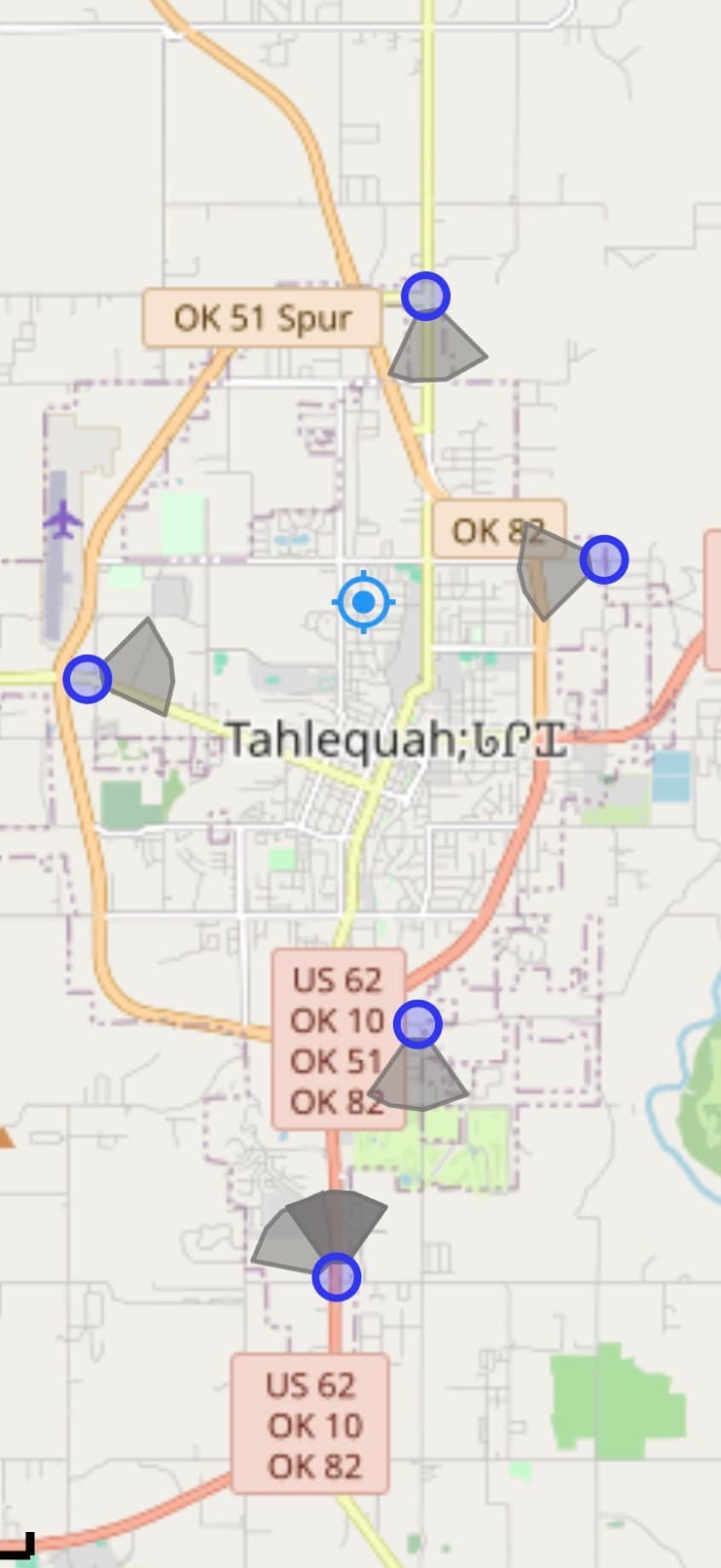
There's a kind of political loneliness that doesn't get talked about much, and I feel it constantly in Tahlequah, Oklahoma. It isn't the loneliness of being surrounded by people who disagree with you. It's the stranger loneliness of being surrounded by people who are supposed to agree with you and still feeling unheard.
I've spent enough time in the folding-chair rooms of local politics, from county meetings to school forums to the occasional town hall, to notice a pattern that cuts across the aisle. Almost nobody my age feels like their party has actually built anything for them.
Ask a young conservative here what the Republican Party has done for rural Oklahoma lately, and you'll get a pause. Guns, maybe abortion, a general distrust of Washington. What you won't hear much about is small-town life itself: the hospital that closed, the internet that still crawls past the city limits, the nearest specialist ninety minutes away. The party has their votes locked in through culture-war loyalty, so it doesn't have to earn them any other way.
I write about a version of this in my upcoming book: a moment testifying in front of state legislators where one of them heard a concern I'd raised and, without really disagreeing with me, calmly handed it back across the table as somebody else's job to solve. That kind of listening costs a politician nothing, and it's the version rural kids get most often, from officials of both parties, on the rare occasion we get a seat at the table at all.
Young progressives describe something that sounds different but rhymes. The national Democratic Party talks about rural America like a mystery to be solved rather than a place people actually live. When rural issues come up, they come up as a messaging problem (how do we talk to these voters) rather than a policy one.
Both experiences point to the same truth: neither party sees rural young people as a constituency worth a real platform. We're wedged between "the base" and "swing voters," useful as a talking point about the party's future and not much else.
That's where the disillusionment comes from. It's not disagreement over policy. It's the sense that politics runs somewhere else, for someone else, and rural kids are supposed to wait their turn. My conservative friends feel taken for granted. My progressive friends feel like their party doesn't know they exist. It's the same abandonment in two different colors.
It would be easy to let that turn into "both sides are the same." I want to resist that, because it isn't true. The parties differ enormously on things that matter. But I won't pretend the loneliness isn't real, because pretending is how you lose a generation of rural kids to the belief that politics is something that happens to them instead of something they can shape.
What would it look like for either party to actually show up here? Not a mailer before a midterm, but real investment: local infrastructure, candidate recruitment that doesn't treat rural districts as afterthoughts, listening sessions that aren't for show. Taking teenagers seriously instead of treating us as a nice anecdote for a fundraising email.
I don't have a tidy fix. What I have is an observation from a county most political strategists never visit: the kids here who care, on the right and the left, are doing the work of democracy with almost no support from the institutions supposed to be doing it with us. We aren't disillusioned with politics. We're disillusioned with being ignored by the people who claim to represent us.
That's not a message either party is going to like. But it's the truth from where I'm standing.

Comments
Join the conversation. Comments are public and appear right away — please keep them civil and on topic.
No comments yet. Be the first to respond.